Introduction
The rapid advancement of artificial intelligence has created widespread debate about the future of human work and organizational decision-making. While early discussions often framed AI as a potential replacement for human employees, the practical evolution of technology adoption within business environments suggests a different trajectory.
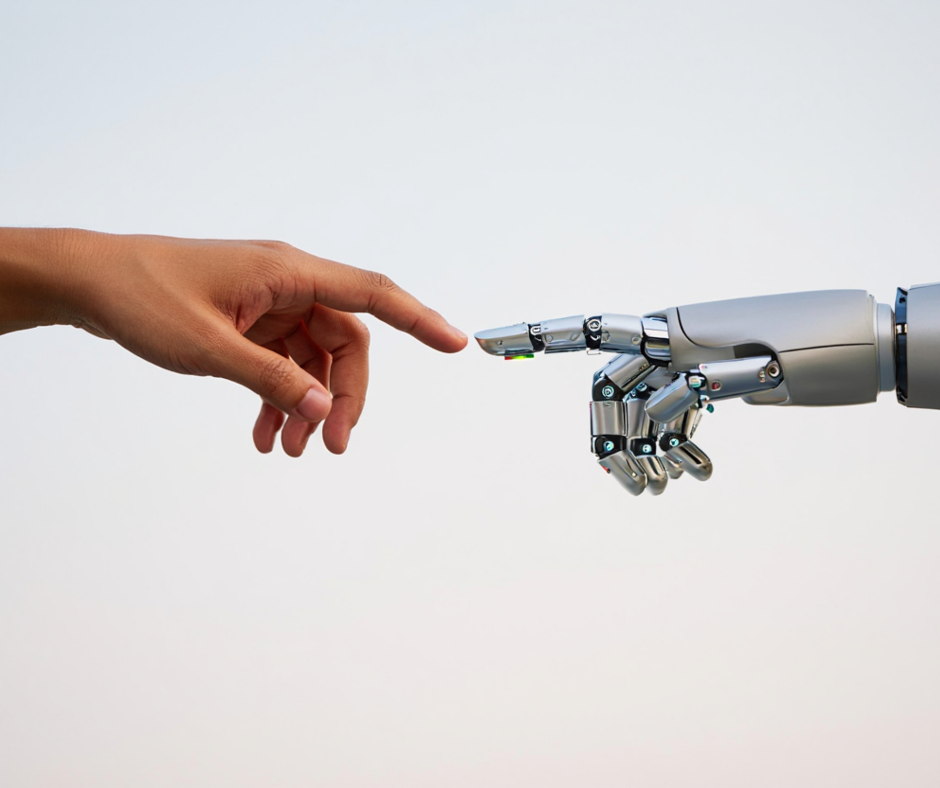
Rather than replacing human decision-makers, artificial intelligence is increasingly functioning as a capability that augments human judgment, enhances analytical precision, and supports faster strategic execution. Organizations that successfully integrate human expertise with advanced machine intelligence are likely to achieve stronger operational performance and more resilient strategic outcomes.
The emerging paradigm is not one of human versus machine but rather of human and machine working together within a unified decision ecosystem.
The Limits of Fully Automated Decision-Making
Artificial intelligence systems excel at processing large datasets, identifying patterns, and generating predictive insights. Machine learning models can analyze supply chain signals, customer behavior trends, production performance metrics, and operational anomalies at speeds far beyond human capability.
However, purely automated decision-making systems face important limitations.
First, AI systems operate within the boundaries of their training data and model architecture. When encountering novel market conditions or unprecedented business scenarios, algorithmic predictions may become less reliable.
Second, many business decisions involve ethical, contextual, or strategic considerations that cannot be reduced to numerical optimization. Leadership judgment, organizational culture, and stakeholder expectations remain critical factors.
Third, excessive reliance on automated recommendations can introduce systemic risk if model assumptions are not continuously validated against real-world performance.
For these reasons, the future of enterprise intelligence is likely to be built on hybrid decision systems that integrate human expertise with computational analytics.
Augmented Intelligence as the New Organizational Model
The concept of augmented intelligence represents a shift away from viewing artificial intelligence as a standalone replacement technology.
In an augmented intelligence model, AI serves as a cognitive enhancement tool that supports human decision-making rather than replacing it.
This approach allows organizations to leverage the strengths of both systems.
Artificial intelligence contributes speed, pattern recognition, scenario simulation, and large-scale data processing. Human decision-makers contribute contextual understanding, ethical evaluation, strategic interpretation, and long-term vision.
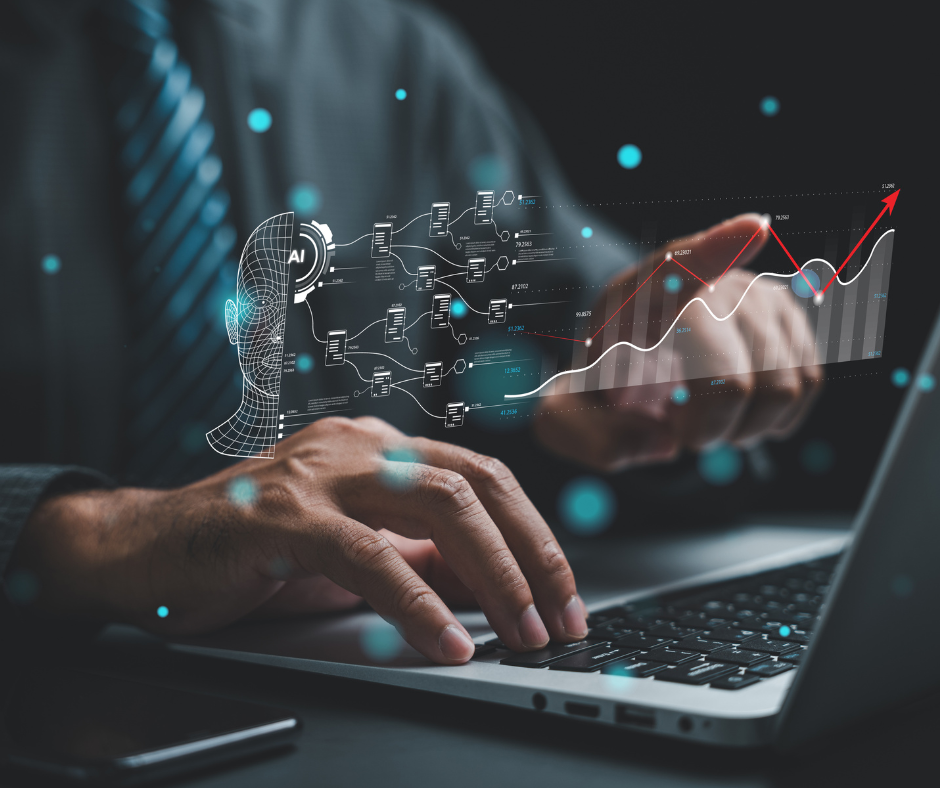
Organizations that successfully implement augmented intelligence frameworks typically design workflows where AI generates structured insights, and human leaders validate, interpret, and finalize strategic decisions.
Human-AI Collaboration in Product-Based Industries
Product-based industries such as manufacturing, logistics, and supply chain management provide particularly strong use cases for human–AI collaboration.
Modern supply chains operate across multiple geographic regions and involve complex interactions between demand forecasting, production scheduling, inventory management, transportation logistics, and risk monitoring.
Artificial intelligence can significantly improve forecasting accuracy by analyzing historical demand patterns, seasonal variations, and external economic indicators. Predictive maintenance models can also identify equipment failure risks before physical breakdowns occur.
However, strategic decisions such as production capacity expansion, supplier relationship management, and market entry planning still require human judgment.
Executives must evaluate not only operational efficiency but also geopolitical risk, supplier stability, brand reputation, and long-term strategic positioning.
Human–AI collaboration enables organizations to combine predictive analytics with executive experience to achieve more balanced decision outcomes.
Organizational Design for Human-AI Collaboration
Successfully integrating human and artificial intelligence systems requires intentional organizational design.
Leadership teams must define how AI-generated insights will be used within decision workflows. Without clear governance, organizations risk creating confusion between recommendation systems and final decision authority.
Several structural elements are critical.
First, organizations should establish transparent model governance practices. AI models must be continuously monitored for accuracy, bias, and performance drift.
Second, decision rights must be clearly defined. While AI systems can provide recommendations, human executives should retain responsibility for strategic choices.
Third, employees must receive training to interpret analytical outputs rather than treating AI recommendations as automatic directives.
Fourth, organizations should design feedback loops where human decision outcomes are used to improve machine learning models over time.
Competitive Advantage Through Collaborative Intelligence
Organizations that effectively combine human expertise with AI-driven analytics can achieve several competitive advantages.
They can respond more quickly to market changes because predictive systems help identify emerging risks and opportunities earlier.
They can improve operational efficiency by reducing manual analysis and accelerating information processing.
They can also enhance strategic consistency by supporting leadership teams with structured, evidence-based insights.
In highly competitive markets, the ability to continuously integrate data intelligence with executive judgment may become a defining characteristic of high-performing organizations.